
How Long Will You Be Paying Out of Habit?
Everyone's talking about sovereignty this year. Chips, data, energy, AI. Underneath the geopolitics, it comes down to one question: what happens to you when the infrastructure you depend on belongs to someone else?
Data
Sovereignty
Strange question to have never turned on your own business.

Renting Rationally
You run your entire customer relationship on rented ground — Meta, Google, and TikTok own the audience, you pay for access — and for twenty years, not asking was the smart thing to do. Renting was rational.
Building an audience of your own meant feeding it. And feeding it meant producing content at a volume that, until very recently, took a studio, a team, a standing newsroom. For a business that sells insurance or loans or steel, that was an absurd cost to carry just to make a point about who owns the customer file. So you rented instead. You paid the platform, you got the reach, and you skipped the overhead of becoming a media company.
The trade was that you owned nothing the moment the spend stopped. (We've made the fuller case elsewhere for why that rent climbs every year with nothing to show for it.) But given the price of the alternative, producing enough content to justify a channel of your own simply cost more than it returned.
That one line was the whole reason the model held. But that line is no longer true.
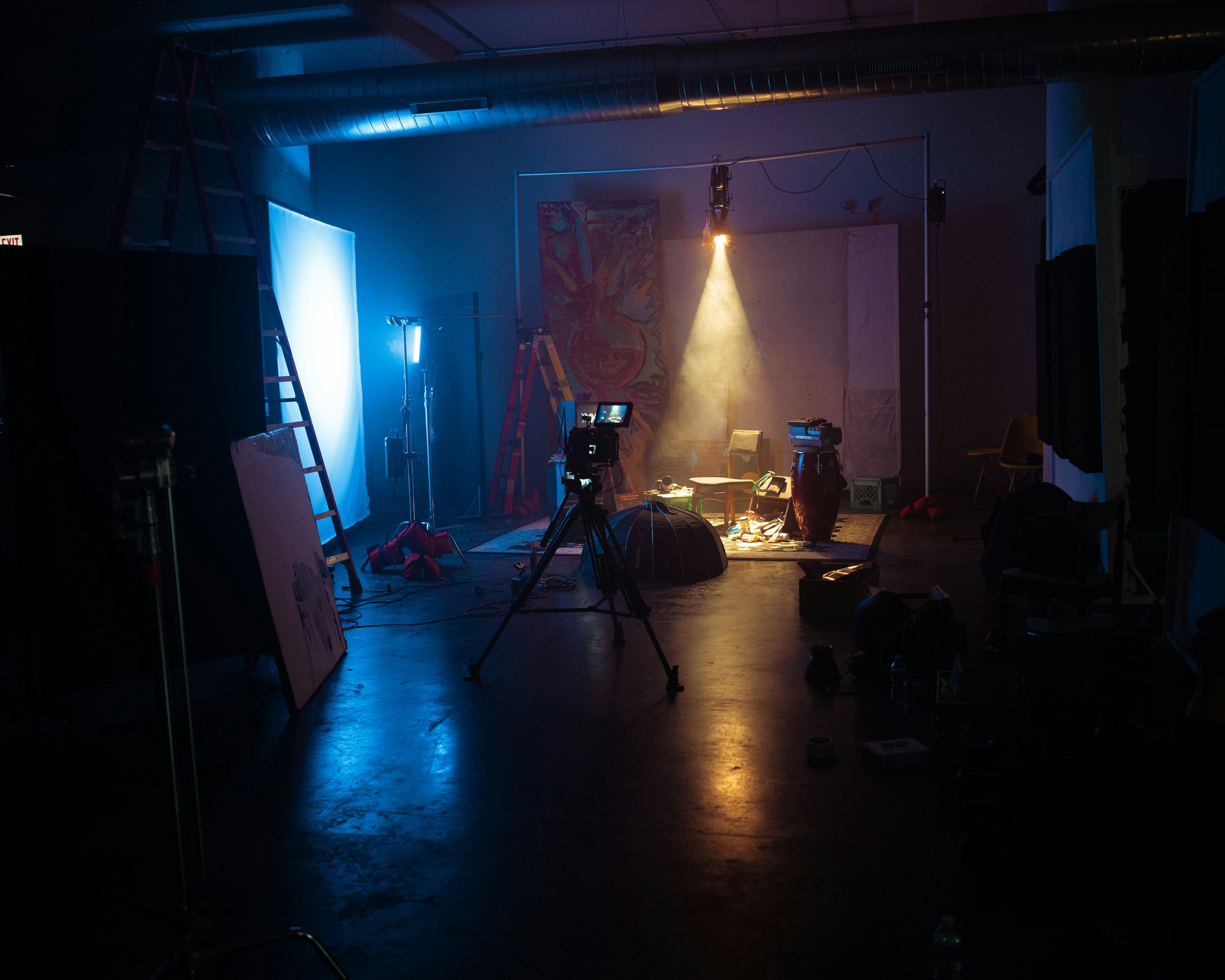
Producing content used to be the expensive part, but now that cost is trivial.
Free For All
One person with the current tools can generate a week of video, a month of copy, and a library of images before lunch. The barrier that made owning your own channel uneconomical fell straight through the floor.
Let's celebrate! Right? Let us all celebrate, because the barrier fell. For everyone.
When content costs almost nothing to make, it stops being worth much to own. Your feed, your competitor's feed, ten thousand businesses you've never heard of — all of them now produce infinite content at near-zero cost. The flood is the point. In a market where anyone can make anything, the content itself is the least defensible thing you have.
So what's left that a competitor can't copy by Friday? When everyone can make anything, volume turns into noise, and the only thing that still cuts through is relevance: the right piece, for the right person, at the right moment. Unfortunately, you cannot generate that. It comes from knowing your customer a little better every quarter: an owned file that sharpens while everyone else's output blurs together.
They can clone your content in an afternoon; they can't clone years of knowing exactly who it's for. Your aim gets better as the flood gets worse. That's the asset now. And the thing that used to price you out of building it just collapsed.
Your only obstacle was the production bill — and it came down from two directions.
Lifted Barriers
You don't have to make the content to own the rails under it.
Ask PicPay. It's a Brazilian fintech — payments, a digital wallet, nothing that says "broadcaster." In under twenty days, it launched PicTV, a live-streaming platform that became the go-to destination for NASCAR fans across Brazil. Over 200,000 concurrent viewers. A bank, with zero media DNA, standing up an owned broadcast operation in three weeks.
How? NASCAR brought the content. PicPay brought the rails — the login, the registration, the verified identity, the data on who showed up and came back. As a fintech, it already owned that infrastructure; it had been sitting there labeled "compliance." Pointed at a livestream, the same rails became an audience nobody could rent back to it.
Every piece of that was lying in plain sight. NASCAR needed a Brazilian home. The audience was already there — a racing crowd nobody had bothered to build for. And a fintech was sitting on identity rails it had built for an entirely different reason. The parts were public.
What wasn't was the judgment to see they fit, and the nerve to wire a payments stack to a live sports broadcast in twenty days, before a competitor finished a slide deck about it. The parts don't make the platform — not the rails, not the content, not the crowd. The architecture that combined them is the whole game.
And when you do make the content yourself, producing it barely costs anything anymore.
Shoot once, and it publishes everywhere, forever. A verified digital twin of your own talent produces around the clock, in every language, with no one on set. Ten editors become one manager. The archive that used to cost money just to sit there becomes inventory you re-cut and re-sell on demand.
Ask Cadbury. For Diwali 2021, it filmed Shah Rukh Khan once, then used AI to rebuild his face and voice to name a different neighborhood shop in every cut — over 100,000 personalized ads, each one pointing at a store near the viewer, from a single afternoon with the actor. WARC later ranked it the most effective ad campaign in the world.
Put those together, and the old calculation breaks.
Sovereign Math
Owning used to mean a large upfront production cost against a payoff that arrived on a delay — so you rented instead and took the reach you could measure by lunchtime. Now production drops to near zero, and what's left is the compounding upside: an audience that returns without being re-bought, a data file you own outright, a relationship the next algorithm change can't switch off.
So the prize isn't cheaper content; that's only the door. But go through the door, and a customer you own is worth five to ten times one you rent: the same person, monetized more than once instead of sold as a single ad impression — a subscription, a purchase, an event, an insight.
And underneath it sits the asset that makes the rest work: one brain across every surface you own, identity resolved, behavior unified, that anyone in the building can query in plain language. The engine that makes everything else cheaper, because you've stopped paying an entry fee to reach people who were already yours.
That's what sovereignty actually means here. Not a camera crew, not a newsroom — a direct line to your own customers, held on your own ground, finally priced within reach.

Being Honest
A few things are worth being straight about. Near-zero marginal cost still means real cost: someone has to build the system, wire the rails together, and stay accountable for it the way you'd hold someone accountable for a product line.
Discovery is real work, too. The first crowd doesn't arrive on its own, and getting people onto owned ground is harder than boosting a post. Twenty days is fast because PicPay reused what it already had, not because a three-week formula works for everyone starting cold.
But none of that changes the shift. The wall that actually kept you renting — the cost of producing at the scale ownership requires — is the one that fell. Everything past it still takes work — but it's work you can finally start, not a wall you can't get over.

The Move
The businesses that pull ahead from here are the ones that notice that "we can't afford to become a media company" was true a year ago. Not anymore.
And those who notice won't build newsrooms. They'll build the engine — content produced at the pace ownership requires, wired straight into rails that turn every view, every login, every return visit into another line in a file they finally own.
The reason you rented was cost. That reason is gone.
The only question left is how long you keep paying rent out of habit.
Featured Case Studies
Featured Case Studies


How Long Will You Be Paying Out of Habit?
Everyone's talking about sovereignty this year. Chips, data, energy, AI. Underneath the geopolitics, it comes down to one question: what happens to you when the infrastructure you depend on belongs to someone else?
Data
Sovereignty
Strange question to have never turned on your own business.
Renting Rationally
You run your entire customer relationship on rented ground — Meta, Google, and TikTok own the audience, you pay for access — and for twenty years, not asking was the smart thing to do. Renting was rational.
Building an audience of your own meant feeding it. And feeding it meant producing content at a volume that, until very recently, took a studio, a team, a standing newsroom. For a business that sells insurance or loans or steel, that was an absurd cost to carry just to make a point about who owns the customer file. So you rented instead. You paid the platform, you got the reach, and you skipped the overhead of becoming a media company.
The trade was that you owned nothing the moment the spend stopped. (We've made the fuller case elsewhere for why that rent climbs every year with nothing to show for it.) But given the price of the alternative, producing enough content to justify a channel of your own simply cost more than it returned.
That one line was the whole reason the model held. But that line is no longer true.
Producing content used to be the expensive part, but now that cost is trivial.
Free For All
One person with the current tools can generate a week of video, a month of copy, and a library of images before lunch. The barrier that made owning your own channel uneconomical fell straight through the floor.
Let's celebrate! Right? Let us all celebrate, because the barrier fell. For everyone.
When content costs almost nothing to make, it stops being worth much to own. Your feed, your competitor's feed, ten thousand businesses you've never heard of — all of them now produce infinite content at near-zero cost. The flood is the point. In a market where anyone can make anything, the content itself is the least defensible thing you have.
So what's left that a competitor can't copy by Friday? When everyone can make anything, volume turns into noise, and the only thing that still cuts through is relevance: the right piece, for the right person, at the right moment. Unfortunately, you cannot generate that. It comes from knowing your customer a little better every quarter: an owned file that sharpens while everyone else's output blurs together.
They can clone your content in an afternoon; they can't clone years of knowing exactly who it's for. Your aim gets better as the flood gets worse. That's the asset now. And the thing that used to price you out of building it just collapsed.
Your only obstacle was the production bill — and it came down from two directions.
Lifted Barriers
You don't have to make the content to own the rails under it.
Ask PicPay. It's a Brazilian fintech — payments, a digital wallet, nothing that says "broadcaster." In under twenty days, it launched PicTV, a live-streaming platform that became the go-to destination for NASCAR fans across Brazil. Over 200,000 concurrent viewers. A bank, with zero media DNA, standing up an owned broadcast operation in three weeks.
How? NASCAR brought the content. PicPay brought the rails — the login, the registration, the verified identity, the data on who showed up and came back. As a fintech, it already owned that infrastructure; it had been sitting there labeled "compliance." Pointed at a livestream, the same rails became an audience nobody could rent back to it.
Every piece of that was lying in plain sight. NASCAR needed a Brazilian home. The audience was already there — a racing crowd nobody had bothered to build for. And a fintech was sitting on identity rails it had built for an entirely different reason. The parts were public.
What wasn't was the judgment to see they fit, and the nerve to wire a payments stack to a live sports broadcast in twenty days, before a competitor finished a slide deck about it. The parts don't make the platform — not the rails, not the content, not the crowd. The architecture that combined them is the whole game.
And when you do make the content yourself, producing it barely costs anything anymore.
Shoot once, and it publishes everywhere, forever. A verified digital twin of your own talent produces around the clock, in every language, with no one on set. Ten editors become one manager. The archive that used to cost money just to sit there becomes inventory you re-cut and re-sell on demand.
Ask Cadbury. For Diwali 2021, it filmed Shah Rukh Khan once, then used AI to rebuild his face and voice to name a different neighborhood shop in every cut — over 100,000 personalized ads, each one pointing at a store near the viewer, from a single afternoon with the actor. WARC later ranked it the most effective ad campaign in the world.
Put those together, and the old calculation breaks.
Sovereign Math
Owning used to mean a large upfront production cost against a payoff that arrived on a delay — so you rented instead and took the reach you could measure by lunchtime. Now production drops to near zero, and what's left is the compounding upside: an audience that returns without being re-bought, a data file you own outright, a relationship the next algorithm change can't switch off.
So the prize isn't cheaper content; that's only the door. But go through the door, and a customer you own is worth five to ten times one you rent: the same person, monetized more than once instead of sold as a single ad impression — a subscription, a purchase, an event, an insight.
And underneath it sits the asset that makes the rest work: one brain across every surface you own, identity resolved, behavior unified, that anyone in the building can query in plain language. The engine that makes everything else cheaper, because you've stopped paying an entry fee to reach people who were already yours.
That's what sovereignty actually means here. Not a camera crew, not a newsroom — a direct line to your own customers, held on your own ground, finally priced within reach.
Being Honest
A few things are worth being straight about. Near-zero marginal cost still means real cost: someone has to build the system, wire the rails together, and stay accountable for it the way you'd hold someone accountable for a product line.
Discovery is real work, too. The first crowd doesn't arrive on its own, and getting people onto owned ground is harder than boosting a post. Twenty days is fast because PicPay reused what it already had, not because a three-week formula works for everyone starting cold.
But none of that changes the shift. The wall that actually kept you renting — the cost of producing at the scale ownership requires — is the one that fell. Everything past it still takes work — but it's work you can finally start, not a wall you can't get over.
The Move
The businesses that pull ahead from here are the ones that notice that "we can't afford to become a media company" was true a year ago. Not anymore.
And those who notice won't build newsrooms. They'll build the engine — content produced at the pace ownership requires, wired straight into rails that turn every view, every login, every return visit into another line in a file they finally own.
The reason you rented was cost. That reason is gone.
The only question left is how long you keep paying rent out of habit.
Featured Case Studies
Featured Case Studies
How Long Will You Be Paying Out of Habit?
Everyone's talking about sovereignty this year. Chips, data, energy, AI. Underneath the geopolitics, it comes down to one question: what happens to you when the infrastructure you depend on belongs to someone else?
Data
Sovereignty
Strange question to have never turned on your own business.
Renting Rationally
You run your entire customer relationship on rented ground — Meta, Google, and TikTok own the audience, you pay for access — and for twenty years, not asking was the smart thing to do. Renting was rational.
Building an audience of your own meant feeding it. And feeding it meant producing content at a volume that, until very recently, took a studio, a team, a standing newsroom. For a business that sells insurance or loans or steel, that was an absurd cost to carry just to make a point about who owns the customer file. So you rented instead. You paid the platform, you got the reach, and you skipped the overhead of becoming a media company.
The trade was that you owned nothing the moment the spend stopped. (We've made the fuller case elsewhere for why that rent climbs every year with nothing to show for it.) But given the price of the alternative, producing enough content to justify a channel of your own simply cost more than it returned.
That one line was the whole reason the model held. But that line is no longer true.
Producing content used to be the expensive part, but now that cost is trivial.
Free For All
One person with the current tools can generate a week of video, a month of copy, and a library of images before lunch. The barrier that made owning your own channel uneconomical fell straight through the floor.
Let's celebrate! Right? Let us all celebrate, because the barrier fell. For everyone.
When content costs almost nothing to make, it stops being worth much to own. Your feed, your competitor's feed, ten thousand businesses you've never heard of — all of them now produce infinite content at near-zero cost. The flood is the point. In a market where anyone can make anything, the content itself is the least defensible thing you have.
So what's left that a competitor can't copy by Friday? When everyone can make anything, volume turns into noise, and the only thing that still cuts through is relevance: the right piece, for the right person, at the right moment. Unfortunately, you cannot generate that. It comes from knowing your customer a little better every quarter: an owned file that sharpens while everyone else's output blurs together.
They can clone your content in an afternoon; they can't clone years of knowing exactly who it's for. Your aim gets better as the flood gets worse. That's the asset now. And the thing that used to price you out of building it just collapsed.
Your only obstacle was the production bill — and it came down from two directions.
Lifted Barriers
You don't have to make the content to own the rails under it.
Ask PicPay. It's a Brazilian fintech — payments, a digital wallet, nothing that says "broadcaster." In under twenty days, it launched PicTV, a live-streaming platform that became the go-to destination for NASCAR fans across Brazil. Over 200,000 concurrent viewers. A bank, with zero media DNA, standing up an owned broadcast operation in three weeks.
How? NASCAR brought the content. PicPay brought the rails — the login, the registration, the verified identity, the data on who showed up and came back. As a fintech, it already owned that infrastructure; it had been sitting there labeled "compliance." Pointed at a livestream, the same rails became an audience nobody could rent back to it.
Every piece of that was lying in plain sight. NASCAR needed a Brazilian home. The audience was already there — a racing crowd nobody had bothered to build for. And a fintech was sitting on identity rails it had built for an entirely different reason. The parts were public.
What wasn't was the judgment to see they fit, and the nerve to wire a payments stack to a live sports broadcast in twenty days, before a competitor finished a slide deck about it. The parts don't make the platform — not the rails, not the content, not the crowd. The architecture that combined them is the whole game.
And when you do make the content yourself, producing it barely costs anything anymore.
Shoot once, and it publishes everywhere, forever. A verified digital twin of your own talent produces around the clock, in every language, with no one on set. Ten editors become one manager. The archive that used to cost money just to sit there becomes inventory you re-cut and re-sell on demand.
Ask Cadbury. For Diwali 2021, it filmed Shah Rukh Khan once, then used AI to rebuild his face and voice to name a different neighborhood shop in every cut — over 100,000 personalized ads, each one pointing at a store near the viewer, from a single afternoon with the actor. WARC later ranked it the most effective ad campaign in the world.
Put those together, and the old calculation breaks.
Sovereign Math
Owning used to mean a large upfront production cost against a payoff that arrived on a delay — so you rented instead and took the reach you could measure by lunchtime. Now production drops to near zero, and what's left is the compounding upside: an audience that returns without being re-bought, a data file you own outright, a relationship the next algorithm change can't switch off.
So the prize isn't cheaper content; that's only the door. But go through the door, and a customer you own is worth five to ten times one you rent: the same person, monetized more than once instead of sold as a single ad impression — a subscription, a purchase, an event, an insight.
And underneath it sits the asset that makes the rest work: one brain across every surface you own, identity resolved, behavior unified, that anyone in the building can query in plain language. The engine that makes everything else cheaper, because you've stopped paying an entry fee to reach people who were already yours.
That's what sovereignty actually means here. Not a camera crew, not a newsroom — a direct line to your own customers, held on your own ground, finally priced within reach.
Being Honest
A few things are worth being straight about. Near-zero marginal cost still means real cost: someone has to build the system, wire the rails together, and stay accountable for it the way you'd hold someone accountable for a product line.
Discovery is real work, too. The first crowd doesn't arrive on its own, and getting people onto owned ground is harder than boosting a post. Twenty days is fast because PicPay reused what it already had, not because a three-week formula works for everyone starting cold.
But none of that changes the shift. The wall that actually kept you renting — the cost of producing at the scale ownership requires — is the one that fell. Everything past it still takes work — but it's work you can finally start, not a wall you can't get over.
The Move
The businesses that pull ahead from here are the ones that notice that "we can't afford to become a media company" was true a year ago. Not anymore.
And those who notice won't build newsrooms. They'll build the engine — content produced at the pace ownership requires, wired straight into rails that turn every view, every login, every return visit into another line in a file they finally own.
The reason you rented was cost. That reason is gone.
The only question left is how long you keep paying rent out of habit.
Featured Case Studies
Featured Case Studies